

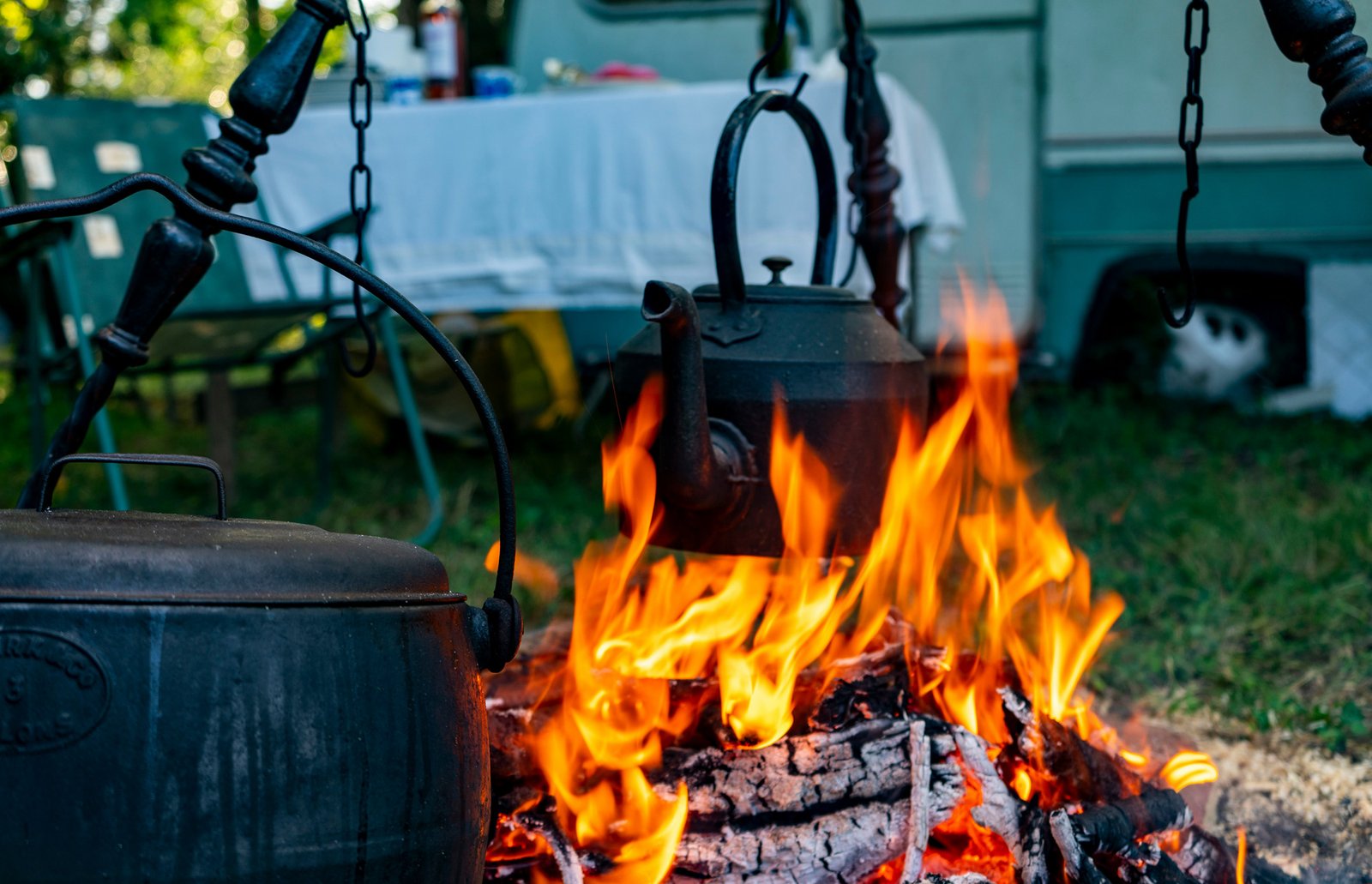
Late October brings the best boondocking weather of the year and the earliest dark. Here’s how to build a cold-weather camp cooking routine around one pot, one burner, and a meal that’s still hot when you sit down to eat it.
There’s a moment every fall when you look up from the stove and realize it’s fully dark and you’re still stirring. It’s barely past dinnertime by the clock, your fingers are going numb, and the pasta you started twenty minutes ago has gone lukewarm in the pot. That’s the moment cold-weather camp cooking stops being a summer hobby with a jacket on and becomes its own skill.
Late October is a great time to be off-grid. The bugs are gone, the dispersed sites are open, and the desert finally cooled off. But everything about cooking changes when the temperature drops: your fuel behaves differently, your food cools faster, and your patience runs out sooner. The fix is simple. Cook less, cook smarter, and make one pot do the work of three.
Plan Dinner Before the Light Goes
The single best change you can make is to do the real work while it’s still daylight. Chop onions, peppers, and potatoes at the afternoon picnic table, not by headlamp at 6 p.m. with cold hands. Pre-measure spices into a small bag or tin. Brown ground meat or sausage early if you can, then let it sit in the pot with a lid on until you’re ready to finish the meal.
Think of dinner as an assembly job instead of a cooking job. A big pot of chili, a hearty stew, or a sausage-and-potato hash all work well because the hard part is done in the daylight hours and the evening part is just reheating and stirring. Make a double batch and tomorrow’s lunch is already handled, which matters when you’d rather not fire up the stove again on a frozen morning.
Keep the Heat, Keep the Fuel
Cold is hard on camp stoves, and different fuels handle it differently. Liquid propane in a standard tank generally keeps working in the cold, but small isobutane canisters lose pressure as the temperature drops and can sputter or burn weakly. If you’re using the little canisters, keep them in a jacket pocket or sleeping bag until you need them, and never warm one near open flame.
Wind is the real fuel thief. A windscreen around your burner can save more fuel than any stove upgrade, and a lid on the pot saves even more. Bring water to a boil with the lid on, drop the flame as low as it will go, and let the pot hold the heat. A good lid and a little patience will stretch a tank farther than you’d expect.
Cast iron and heavy Dutch ovens earn their weight this time of year. They take longer to heat, but once they’re hot they hold it, which means your food stays warm through the whole meal instead of cooling off by the second bite. If you cook on a lighter pot, a cheap insulated cozy, or even a spare wool hat pulled over the pot after you take it off the stove, will keep dinner hot while you get the camp chairs situated.
Cook Outside, and Stay Safe Inside
When the evening gets cold, it’s tempting to move the stove into the camper or tent. Don’t do it without thinking it through. Burning propane or any other fuel indoors produces carbon monoxide, and a closed-up rig on a cold night is exactly where it builds. If you cook inside your rig, crack a window and run the vent fan. Make sure you have a working carbon monoxide detector and a working smoke detector, and change the batteries each season. Never use a camp stove, grill, or charcoal to heat a sleeping space.
For most of us, the better answer is a good outdoor setup: a stove on a stable table, a windscreen, a headlamp on a strap, and a thick layer of clothes. A pop-up canopy or a tarp strung off the side of the rig will block wind and keep drizzle off the stove without enclosing the space. Fire restrictions often relax this time of year, but check the current rules for the land you’re on before you light anything.
Warm Up Your Hands, Warm Up the Morning
Don’t forget the other two meals. A thermos of hot water filled at breakfast and kept sealed will give you tea, coffee, or instant oatmeal at lunch without lighting the stove again. Overnight oats and pre-cooked breakfast burritos that you reheat in a skillet cut the morning routine to a few minutes, which is a real gift when it’s 28 degrees outside the door.
Hot drinks do more than taste good. They get your core warm and give you a reason to linger at the table after dinner, which is half the point of camping in the fall. Keep a small pot of water on the back burner after the meal for cocoa, tea, or washing up, and you’ve got a warm-water supply for the dishes without burning through your tank.
The Best Meals Are the Easy Ones
Cold-weather camp cooking doesn’t have to be complicated. Brown the meat, build the pot, let it simmer while you watch the stars come out, and sit down to something that tastes like it took all day. The best fall boondocking meals are the ones where the work happened in the sunshine, and the only thing left after dark is a spoon.
So pack the big pot, keep the fuel warm, and plan for dinner at dusk. The nights are long this time of year, and a hot bowl in your hands makes them a lot better.