

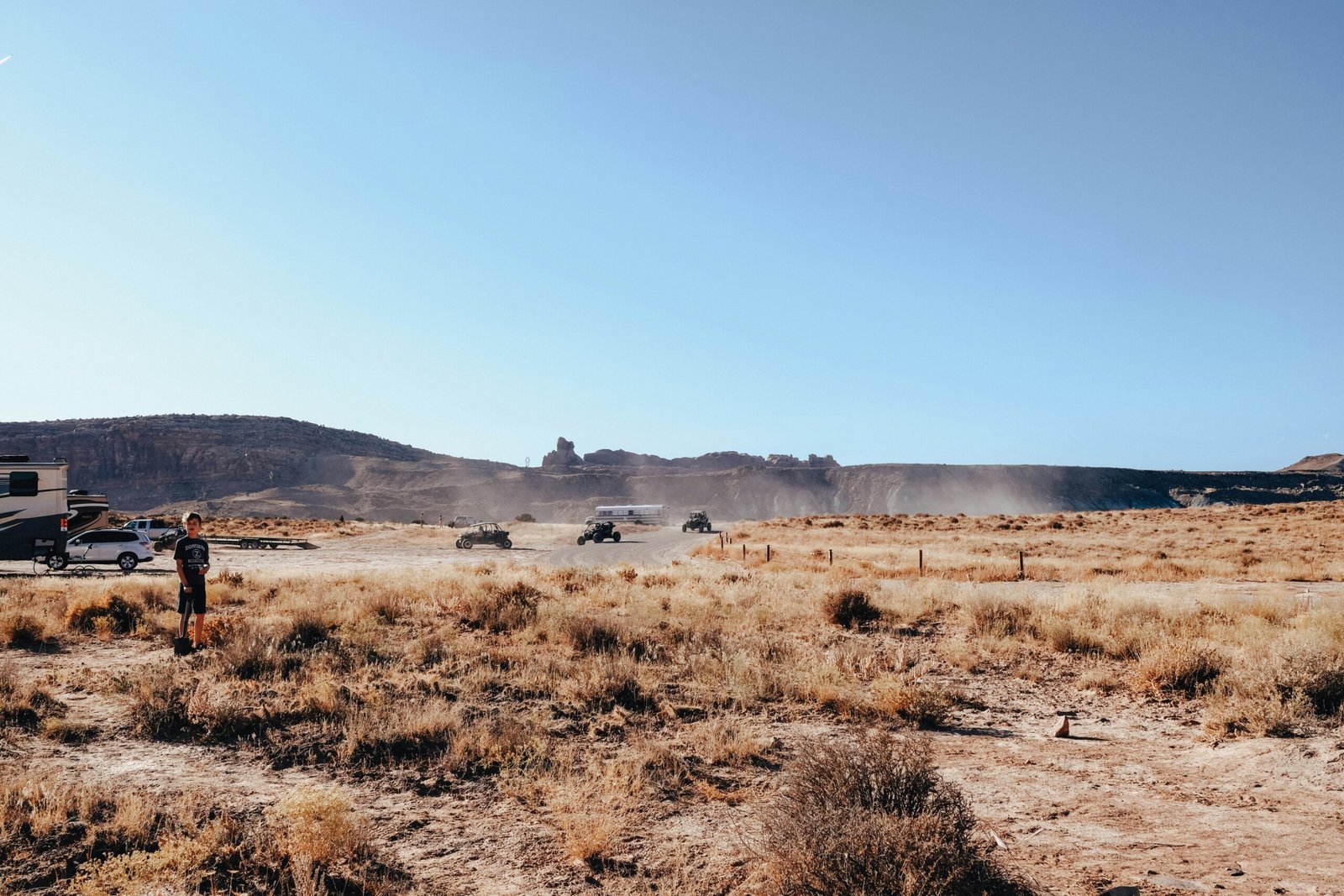
April’s thin slice of perfect weather is closing fast. Here’s where to point the rig.
There’s a narrow window in the American West — somewhere between the last spring storm and the first hundred-degree afternoon — when the desert belongs to anyone willing to show up. The wildflowers are still making their case. The camp hosts haven’t fully rolled in yet. The ground, baked hard by winter, is finally dry enough to handle a loaded truck without turning every two-track into a grave.
That window is now. If you’ve been sitting on a spring trip waiting for the “right time,” this is it. By Memorial Day, half these spots will be crawling. By mid-June, the shade side of your rig will read 112°F and you’ll be chasing elevation like everyone else. So grab the maps, top off the water, and let’s get to it.
Alabama Hills, California
Long before drones and Instagram, Alabama Hills was where Hollywood came to shoot westerns — Lone Ranger chases, Gene Autry gunfights, the whole dusty canon. Now it’s where overlanders come to park between the Sierra and the Inyos with nothing between them and a million stars. The BLM rolled out a permitting system a few seasons back that capped overnight use, so it’s quieter than it used to be, and in mid-April — with the Sierra still wearing deep snow and Lone Pine temps hovering in the low 70s — it’s close to perfect.
Stock up in Lone Pine before you head in. Air down for the washboard on Movie Road and tuck back into one of the decomposed-granite pullouts. Cell service is spotty but workable for most carriers if you need it. Leave it cleaner than you found it; this place earned its protection.
Valley of the Gods, Utah
If you’ve only ever heard of Monument Valley, you’re missing the quieter, free version twenty miles north. Valley of the Gods is a seventeen-mile BLM loop through sandstone towers that feel like they were carved specifically to humble you. Dispersed camping is allowed off the main road — pick a pullout that won’t trample vegetation, and stay put.
April runs mid-70s daytime and mid-40s at night: easy sleeping, easy cooking, and cold enough after sundown that the dutch oven earns its keep. Bring everything you need. There’s nothing out there but the rock and the light and, if you’re lucky, the sound of absolutely nothing at all. Most rigs can handle the loop dry, but add rain and the clay turns to a grease that will strand you — check the forecast before you commit.
Toroweap / Tuweep, Arizona
This one’s earned. Sixty-plus miles of unmaintained dirt from the nearest pavement gets you to the least-visited overlook on the Grand Canyon, where the North Rim drops three thousand feet straight down to the Colorado River. No guardrail. No gift shop. No cell service for a day’s drive in any direction.
Do not attempt after rain. Do not attempt in a low-clearance rig or on road tires. Do attempt it now, in April, when the track is dry, the rim is cool enough to keep the casual crowds at bay, and the light at the edge does things you’ll be trying to describe for the rest of your life. The primitive campground at the end takes reservations through the Park Service these days, so book ahead — but the drive and the payoff are still the real thing. This is off-grid living distilled: you and your rig, a long line of dirt, and an ending worth every mile.
Coal Mine Canyon, Arizona
A sleeper. Coal Mine Canyon sits on Navajo land off Highway 264 between Tuba City and Hopi, and its striped badlands look like someone poured sherbet over sandstone — pink, cream, rust, purple, all banded together like geologic layer cake. Dispersed camping requires a permit from the Navajo Nation (call ahead; office hours shift seasonally), and the area is sacred to the Hopi, so respect matters more here than the usual pack-it-in-pack-it-out.
For the traveler who’s done the big-name parks and wants something that still feels discovered, April is the month. Cool mornings, no crowds, and a quality of light that photographers drive three states to find. Bring your own water — there isn’t any — and plan to leave no trace you were ever there.
The Math of the Shoulder Season
The shoulder season is called “shoulder” for a reason: it holds the weight. It’s the slim margin where the desert is kind, the high country is still reachable without snow chains, and your rig isn’t wedged into a dispersed site beside fifteen others running generators. Every year that window seems to shrink a little — another road gets graded smooth, another “secret” gets a pin dropped on it, another state tightens dispersed-camping rules because people kept trashing the place.
You can grumble about that or you can load the truck tonight and use what’s left. Fill the tanks, check the tire pressures you’ll drop to on the first washboard, throw an extra jug of water in the bed for good measure. The window is open. It won’t be for long.
See you out there.