

Every shut-down dispersed site in the West has the same origin story. Here’s how to stop being part of it.
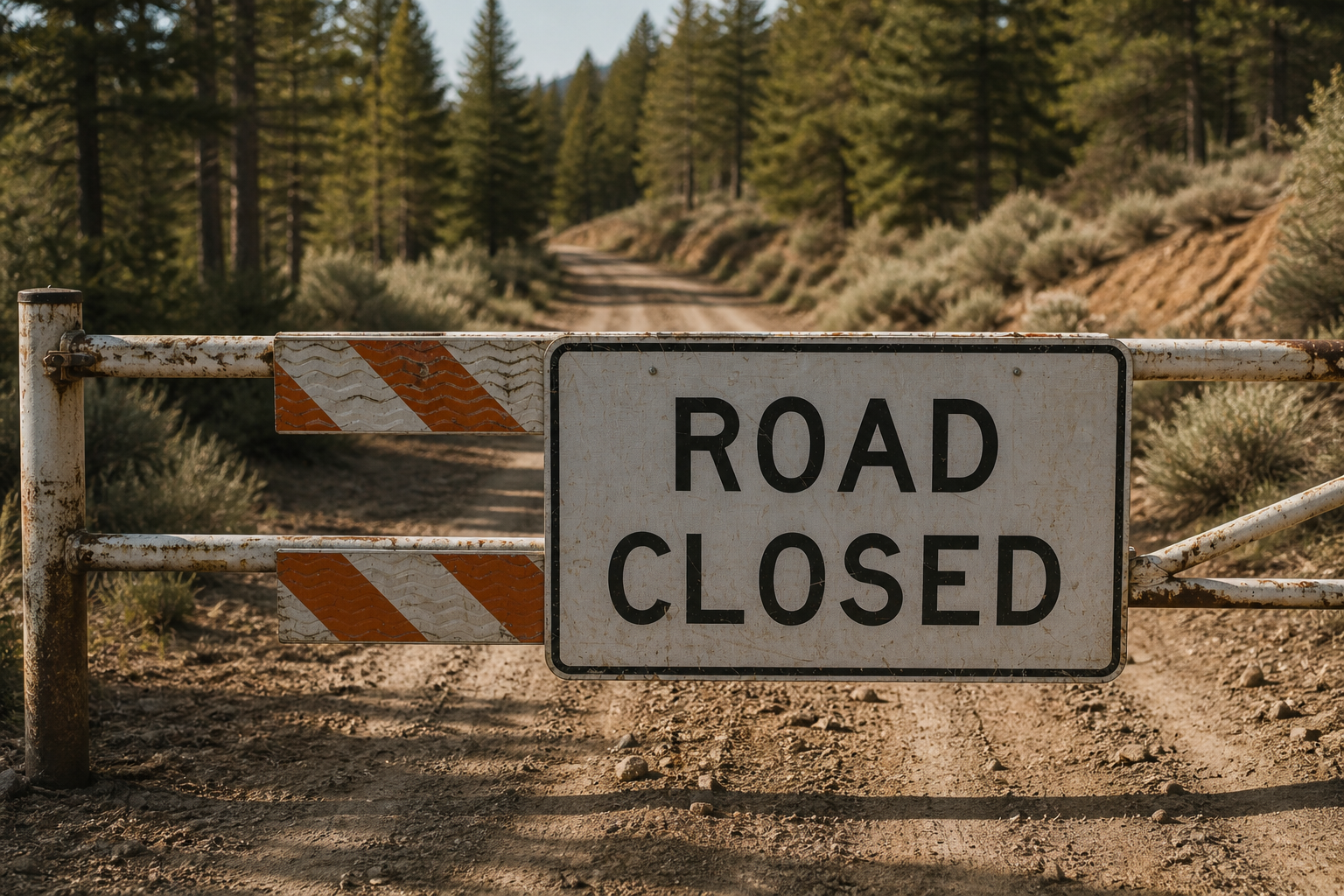
A site I loved closed recently. Standard issue — pretty creek, BLM, ten miles of dirt, the kind of place that doesn’t show up on Instagram pins and reads as blank stretch on most maps. I’d been camping there off and on for six years. Last Wednesday the Forest Service posted a closure order on the gate. Two-year minimum, possibly indefinite.
The reason wasn’t fire. It wasn’t drought. It wasn’t a wildlife conflict or a cultural-resource concern. It was trash. Specifically: piles of human waste at the tree line, abandoned camp chairs, two bullet-riddled appliances dumped into the creek, and a fire ring expanded by some recent genius to roughly the footprint of a small bedroom.
The closure didn’t happen overnight. It happened in pieces, weekend by weekend, over a couple of years. By the time the Forest Service circulated the proposal, the site was already on its knees. Ranger photos in the public comment file showed eighty bags of trash hauled out in a single spring cleanup. Eighty.
This is the part of the boondocking life nobody likes to talk about. The thing that makes the whole life possible — free, dispersed camping on hundreds of millions of acres of public land — is, structurally, the most fragile part of the equation. It exists because for the better part of a century, the people using those acres largely didn’t trash them. The moment that math breaks, the gates close.
The New Volume of It
I want to be careful here. There have always been jerks. There have always been bullet-blasted refrigerators in obscure pullouts, fire rings stuffed with diapers, busted lawn chairs left for the next visitor. That’s not new.
What’s new is the volume. Dispersed camping has gone from a niche subculture of truck campers, hunters, river guides, and seasonal workers to a mainstream activity. Quartzsite swelled. Van life exploded. Truck camper sales doubled in five years. Lots of new people. Most of them — and I mean most — are doing it right. But “most” isn’t 100%, and the math of public-land use is brutal: a tiny percentage of bad behavior at scale can crush a site faster than the agencies can respond.
A district ranger I trust told me last fall that the percentage of bad actors hadn’t really changed. The base rate did. With ten times the visitors, even one percent of jerks turns into a hundred times the trash, the fires, the human waste, the abandoned camps. The site doesn’t know the difference between a bad apple and a trend — it just gets worn down.
What Happens When a Site Closes
A site closure is not a one-season inconvenience. It’s a domino. The closure pushes everybody who used that site onto the next one. The next one wears down faster. It closes. The pattern repeats. Anyone who’s been boondocking for more than five years can name a half-dozen places that have shifted from “open to dispersed camping” to “designated sites only” to “permit required” to “no overnight use.” That’s the gradient, and it points one direction only.
The agencies aren’t the villains here. Forest Service and BLM staff I’ve talked to mostly love dispersed users — we’re cheap, low-impact when we behave, and largely self-reliant. But they have budgets, and a site that requires eighty bags of cleanup every spring simply doesn’t pencil. The closure is the cheapest tool in their kit, and it’s the one they reach for last.
The Unsexy Math of Doing It Right
Here’s what leave no trace boondocking actually looks like, since it’s worth being specific. Use existing fire rings. Never expand them. Never start new ones in unburned ground. Pack out everything you brought in, plus a little extra in your trash bag for whatever the last person didn’t. Bury human waste in a six-inch cathole at least 200 feet from water — or, better, carry wag bags and pack it out. Don’t ground-camp on vegetation when a hardpan pullout sits fifty feet away. Don’t run the generator past dark or before 8 a.m. Don’t shoot at appliances and leave the carcass.
None of this is news. It’s been on every Leave No Trace pamphlet since the ’90s. The reason it bears saying again is that the consequences have changed. Twenty years ago, the cost of one weekend slob was a bad afternoon for the next person through. Today, the cost is a closure order — and the next person through has nowhere to go.
What the Community Owes Each Other
The thing I wish more newer boondockers understood is how much of this off-grid life runs on quiet mutual policing. The reason a thousand BLM sites are still open is not enforcement. It’s the fact that for decades, the people using those sites have hauled out other people’s trash, broken down oversized fire rings, and reported the truly egregious stuff to the agencies before it metastasized. That work is invisible. It’s also the only thing standing between us and the closure cycle.
If you’re new to this, do that work. Pick up the cans in the pullout you didn’t leave. Knock down the fire ring that’s grown to ten feet across. If you see somebody doing the genuinely bad stuff — dumping waste, blasting glass, running a generator at 2 a.m. — say something, or document it and report it. It’s not policing. It’s the rent we pay.
The dispersed camping window in the American West is wider, in absolute terms, than almost anywhere else on earth. It’s also closing — slowly, site by site, with the calm bureaucratic weight of a Forest Service signature. We can’t reopen the ones already gone. We can keep the open ones open.
That’s the only job. Don’t blow it.
See you out there.