

The solitude is the whole point of dispersed camping — and also the reason nobody’s around when something goes wrong. Here’s how experienced boondockers actually protect their rigs.
There’s no front desk out here. No night manager, no property camera, no neighbor who happens to be looking out the window when someone walks up to your rig. The empty two-track that makes boondocking worth doing — the reason you drove past every campground with a gate and a fee box — is the same reason your rig is on its own if something goes wrong while you’re ten miles up a trail with no cell signal.
Most boondockers never think about rig security until something gets taken. Then they think about nothing else for a season. July is peak travel season on public land, which means more rigs parked remotely, more first-timers who found a “hidden gem” site on an app last week, and more opportunity for the kind of casual, unplanned theft that thrives on isolation. It’s worth a real look at what actually works.
The Popularity Problem
Boondocking used to run on a quiet trust economy — word of mouth, a nod on the two-track, an unspoken agreement that everyone out here understood the deal. Apps changed that. A site that took three seasons of scouting to find in 2015 now has a pin, a rating, and six hundred saves. That’s not a complaint about the apps; it’s just an honest accounting of what “popular dispersed site in July” actually means now: more strangers, faster turnover, and less of the old assumption that everyone parked near you shares your values.
That shift is exactly why security gear that felt like overkill five years ago has become standard practice for a lot of full-timers. It’s not that the boondocking community got less trustworthy. It’s that the population sampling from any given site got a lot bigger, and bigger samples include more bad actors by simple math.
What Actually Walks Off
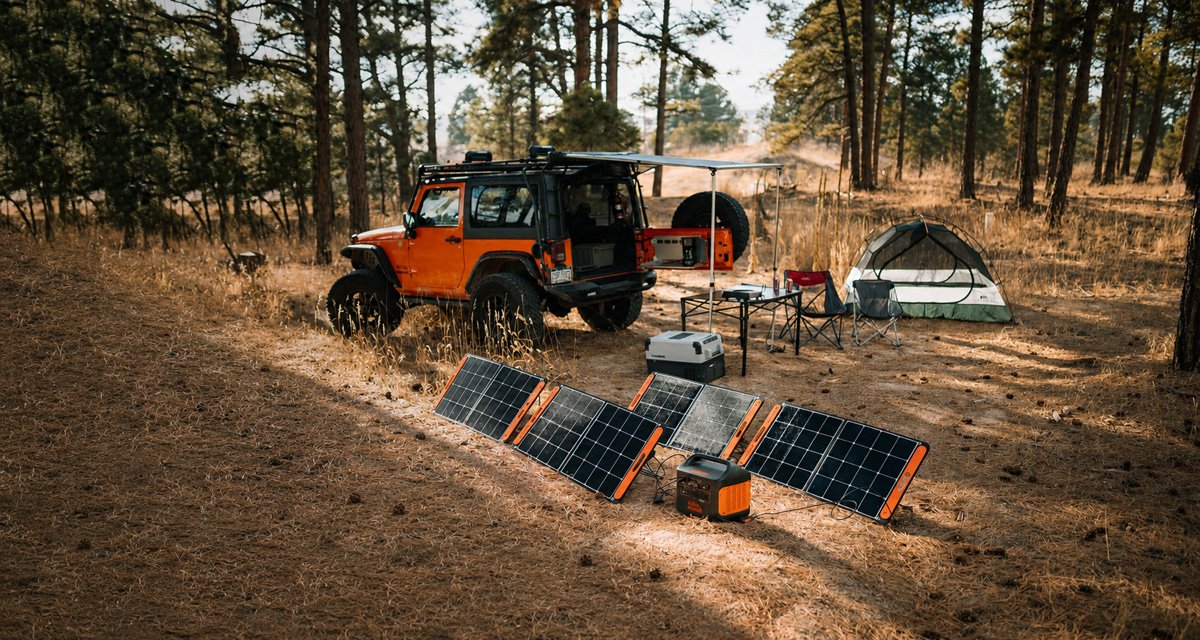
Talk to enough boondockers and a short list repeats itself. Portable solar panels mounted with standard wingnuts or thumbscrews are an easy target — no tools required, thirty seconds, gone. Portable generators left staged outside overnight get taken too, especially the popular inverter models that resell easily; there’s no solid data ranking one above the other, but both share the same vulnerability — they’re valuable, detachable, and usually left sitting in the open overnight. E-bikes and bike racks get hit when a rig is left unattended for a day hike. Propane tanks, jerry cans, and camp chairs left out at an empty site disappear far more often than most people expect. And the quieter risk — a break-in while you’re away from the rig on a hike or supply run — happens more than it gets talked about, mostly because most thefts are opportunistic rather than planned.
Gear and Habits That Actually Help
Start with the cheap fixes. Swap wingnuts on portable solar panels for security screws or a cable lock through the frame — a five-dollar fix that eliminates the thirty-second grab-and-go theft entirely. A hitch lock deals with tow-away theft by blocking the coupler so nobody can hitch up your trailer and drive off with it, and a set of locking lug nuts deals with the separate risk of someone jacking up a parked truck or trailer and walking off with just the wheels and tires. Cable-lock your generator to the frame or a fixed point rather than just setting it on the ground; most thieves are looking for speed, not a fight with a lock.
Cellular trail cameras — the kind hunters use to monitor game — have become one of the most effective and least talked-about tools in the boondocking security kit. They don’t need wifi, run on batteries or a small solar panel for months, and send a photo to your phone the moment something moves near the rig, whether you’re a mile away on a hike or three states over. Pair that with a cheap motion-activated light and you’ve covered the two things opportunistic theft depends on most: darkness and the assumption that nobody’s watching.
A GPS tracker tucked into the rig — a Bluetooth tag for close range, a cellular unit like a Garmin inReach or Spot for true middle-of-nowhere coverage — won’t stop a theft, but it turns “the truck is just gone” into “the truck is fifteen miles east on Forest Road 402,” which matters enormously to both you and law enforcement.
And a few habits cost nothing. Park nose-out for a fast exit if a site feels wrong. Don’t livestream your exact coordinates on social media until you’ve already left. Photograph your gear and rig now, with serial numbers, before you ever need the documentation for an insurance claim. Trust the vibe check on a site — if something feels off when you roll in, it’s fine to keep driving.
The Point Isn’t Paranoia
None of this is about turning boondocking into a fortified operation. The overwhelming majority of nights out here pass exactly the way they always have — quiet, uneventful, nobody within five miles who means you any harm. But the solitude that makes this lifestyle worth it is the same variable that makes basic security gear worth carrying. A cable lock and a trail camera aren’t a statement about the boondocking community. They’re just insurance you hope you never need, for the one night in a hundred when you do.