

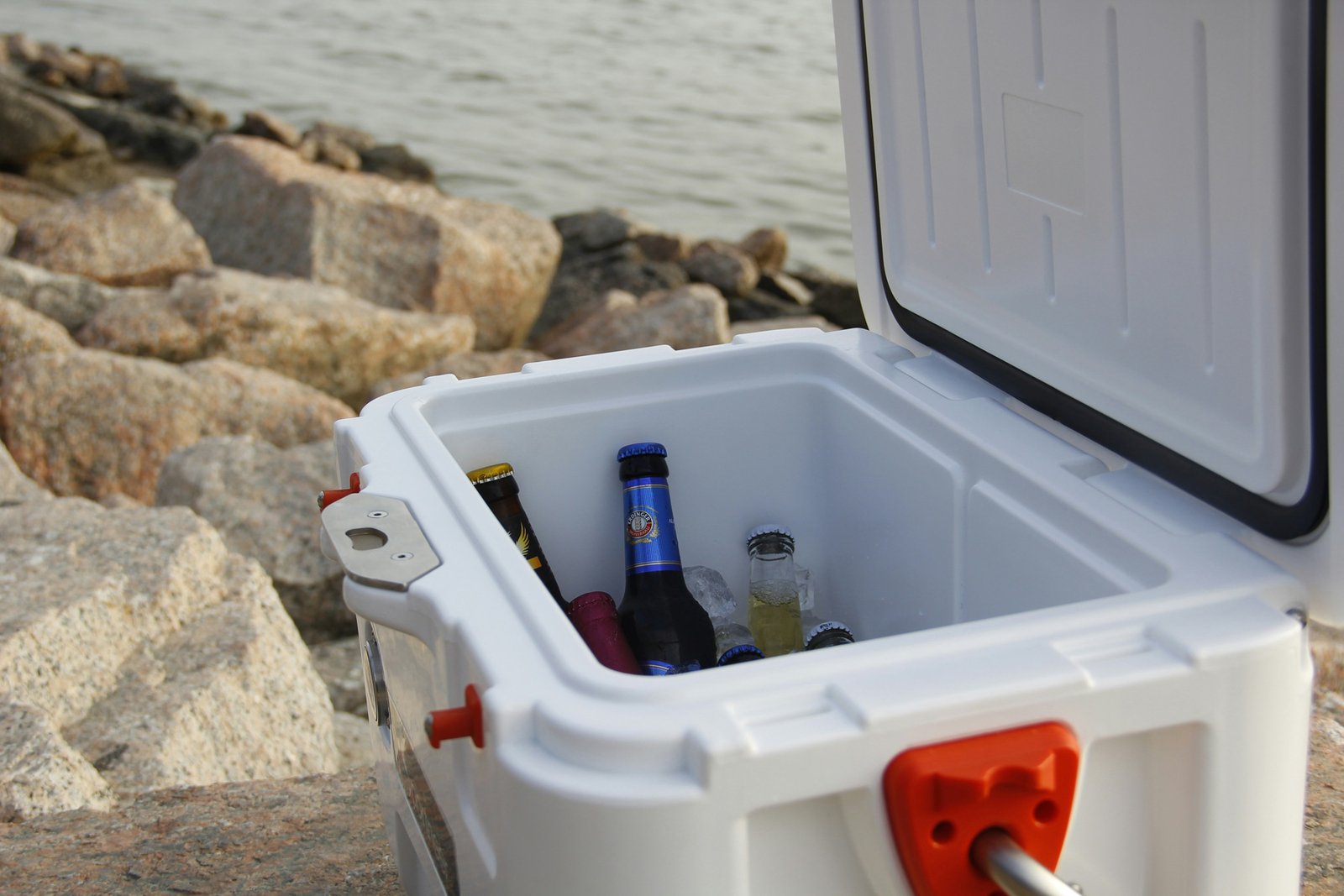
Ice runs get old fast once camp temps clear 100°F. Here’s how experienced boondockers choose between coolers, 12-volt compressor fridges, and hybrid setups when summer heat finally forces the question.
By the third day of a heat wave outside Moab, the ice in my chest cooler wasn’t ice anymore. It was a lukewarm bag of regret floating around a block of cheese and something that used to be lunch meat. I’d bought eighteen pounds of it two days earlier for six dollars at a gas station forty-five minutes from camp. It lasted less time than the drive did. That’s the moment most boondockers start seriously pricing out an off-grid fridge setup — not in April when it sounds like a nice upgrade, but in August when the cooler finally loses the argument.
Heat doesn’t just melt ice faster. It changes the math on food safety, trip length, and how far you’re willing to camp from town. A cooler that holds four days in May might not hold thirty-six hours once ambient temps sit in the high 90s and your rig’s interior climbs past that in direct sun. Below that line, this is about spoiled groceries. Above it, it’s actually about whether the eggs and chicken you packed are safe to eat by day two.
Where the Cooler Actually Breaks
A quality rotomolded cooler with thick walls will genuinely outperform a cheap foam chest — that part of the marketing is true. But even the best ice chest is fighting a losing battle once outside temps climb past 95°F for multiple days running. Ice melts on a curve, not a line: the first day’s ice cools the box down, and every day after that is spent fighting heat leaking in through the lid gasket, the lid itself, and every time you open it to grab a drink. Camp near reflective rock or dark dirt, and radiant heat off the ground adds another layer the manufacturer’s spec sheet never accounted for.
The real cost isn’t the ice — it’s the ice runs. Once you’re buying bags every day and a half, you’re either camping closer to town than you want to, or you’re cutting trips short. For boondockers who camp a week or more at a stretch, especially in the low desert and Southwest canyon country where August highs are brutal, the cooler stops being the budget option and starts being the thing that limits how far off-grid you can actually go.
Sizing an Off-Grid Fridge Setup for Real Heat
A 12-volt compressor fridge solves the melt problem, but it introduces a power problem, and that’s where a lot of first-time buyers get the math wrong. Compressor fridges — the danfoss-style units in Dometic, ARB, and similar builds — pull roughly 40 to 60 watts when the compressor is actually running, but the duty cycle is what matters. In cool weather that might be 20 to 30 percent of the time. In a 100°F-plus dry-camp afternoon with the fridge sitting in a hot cabin, that duty cycle can climb past 50 percent, pushing daily draw toward 700 to 1,000 watt-hours — comparable to running a second rooftop fan all day, every day. If you sized your solar array for spring camping, August is where that array gets tested.
The fix isn’t a bigger fridge. It’s matching fridge size to actual need — a 12- to 20-quart unit handles perishables for two people fine, while anything past 40 quarts is usually overkill unless you’re feeding a crowd — and being honest about the power budget it adds on top of everything else already pulling from the battery bank this time of year.
Thermoelectric coolers are the cheaper alternative and worth mentioning only to rule them out for serious summer boondocking: they cool relative to ambient temperature, not to a set target, so in 100°F heat they struggle to get much below 75°F inside. Fine for a six-pack. Not fine for chicken.
Placement Is Half the Battle
Where the fridge sits matters almost as much as the fridge itself. Compressor units need airflow around the condenser coils — boxed into a tight cabinet with no ventilation, they work harder and shorten their own lifespan. Keep the fridge out of direct afternoon sun, off the truck bed’s black liner if it’s exposed, and away from anything else generating heat nearby, like an inverter or a charge controller. A fridge running in the shade of an awning pulls meaningfully less power over a full day than the identical unit sitting in full sun three feet away.
Small habits help too: pre-chilling the fridge and its contents before you leave shore power or a generator charge, packing it fuller rather than emptier (mass holds cold better than air), and resisting the urge to open the lid to browse. Every open cycle costs recovery time the compressor has to work to earn back.
The Hybrid Approach
Most experienced August boondockers don’t pick one system — they run both. A small 12V fridge handles the perishables that actually matter: meat, dairy, anything that spoils fast and ruins a trip if it does. A separate ice chest handles drinks, produce that tolerates a wider temperature range, and anything you’re pulling from constantly, so the fridge door isn’t opening every ten minutes. It’s less elegant than an all-fridge rig, and it costs more upfront than an all-cooler one, but it’s the setup that actually survives a two-week August stretch without a single ice run.
The lukewarm cheese outside Moab taught me the lesson the expensive way. The gear didn’t fail — the plan did. An off-grid fridge setup built for real August heat, not the spec sheet’s idea of summer, is what keeps the food good and the trip going past day three.